
Why the South West of England Is One of the Most Fascinating Regions to Explore
A 7-Day Travel Guide with Insight, History, and Practical Advice
When people think about visiting England from the USA, London often takes center stage. Yet some of the country’s richest history, most dramatic landscapes, and most memorable travel experiences are found in the South West of England. This region quietly tells the story of England itself, from Roman occupation and medieval power struggles to literary landscapes and coastal geology millions of years old.
If you are planning a seven-day trip and want more than surface-level sightseeing, the South West offers an unmatched concentration of meaningful places, many of which are easier and more rewarding to explore with local guidance or as part of an all inclusive vacation with everything taken care of including your food, accommodation and a private driver and guide to look after your every need. With English Cottage vacations, you get all of this and more to enable you to enjoy your trip to the UK with no stress other than wondering if you will have another portion of Laura’s delicious cake.
Sherborne: A Small Town With Over 1,300 Years of History
Sherborne is the kind of place many travelers overlook, yet it played a key role in England’s early development. It was once the capital of the Saxon kingdom of Wessex, long before England was united as a single nation.
Sherborne Abbey reflects this long timeline. Parts of the site date back to the early eighth century, and the building shows architectural layers shaped by Saxon, Norman, and later medieval influences. Nearby Sherborne Castle tells a very different story. Built by Sir Walter Raleigh in the Elizabethan period, it represents England’s shift from medieval fortresses to elegant country estates.
Travel advice: Sherborne is best appreciated slowly. Without local knowledge, visitors often miss its historical importance entirely. A guided visit brings context to what might otherwise feel like a quiet market town.
Why Corfe Castle Is One of England’s Most Dramatic Ruins
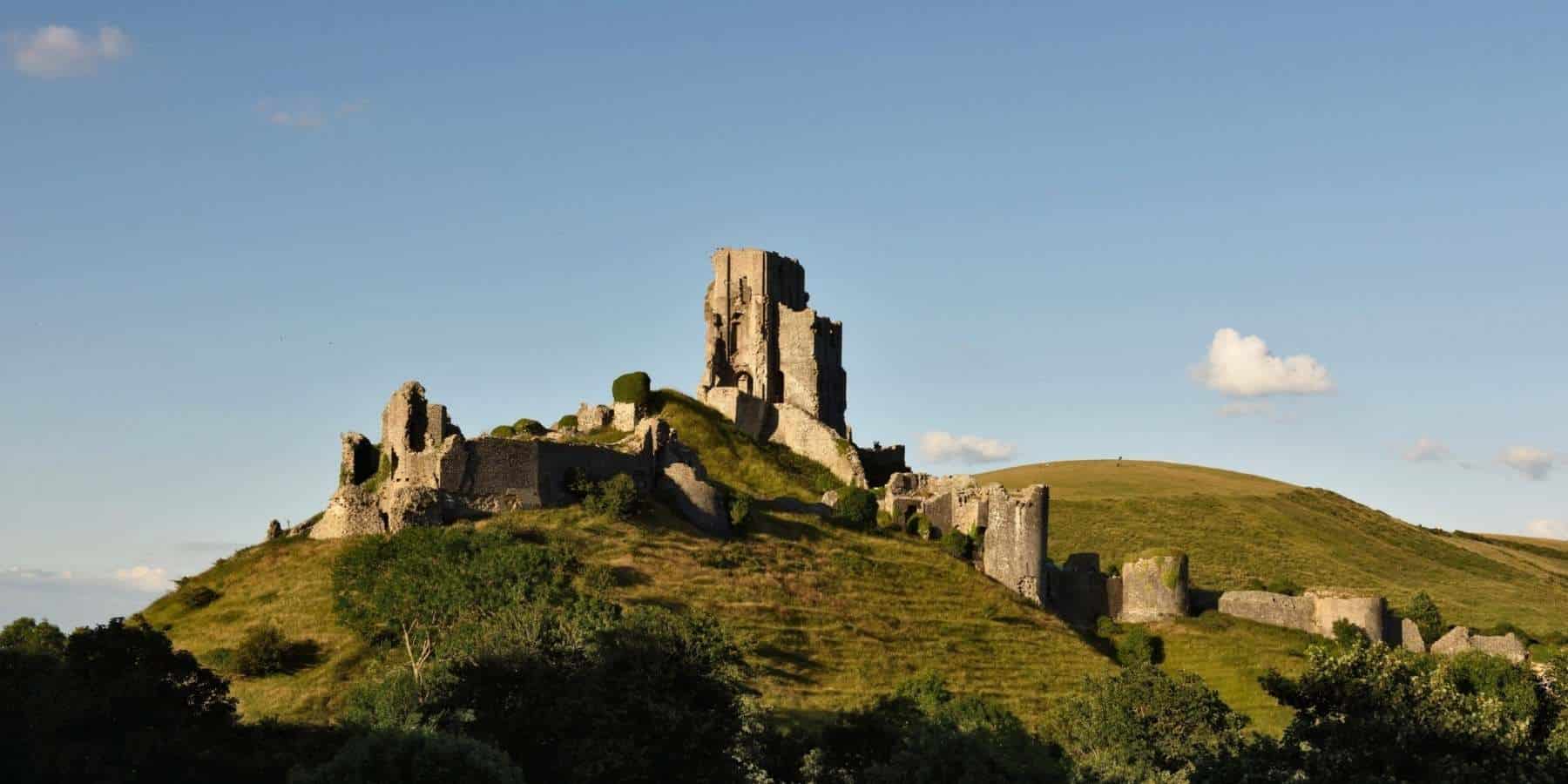
Corfe Castle is famous not just for its striking appearance, but for what it represents. Built shortly after the Norman Conquest, it was one of the earliest stone castles in England and symbolized royal authority during a time of constant political instability.
The castle was deliberately destroyed during the English Civil War in the 1640s, leaving behind the dramatic ruins that still dominate the surrounding village today. Unlike many castles that quietly faded into history, Corfe’s destruction is well documented, making it one of the most emotionally powerful historic sites in the country.
Why it matters: Corfe Castle tells the story of power, rebellion, and the cost of civil war. Standing among the ruins gives visitors a tangible sense of England’s turbulent past.

Kingston Lacy and the Rise of the English Country Estate
Kingston Lacy offers insight into how England changed after the medieval period. As castles lost their defensive purpose, wealthy families began building grand houses designed for comfort, art, and status rather than warfare.
The house and estate reflect centuries of changing tastes, colonial influence, and wealth accumulation. The surrounding parkland is just as important as the house itself, illustrating how land ownership shaped England’s rural landscape.
Travel advice: Visiting places like Kingston Lacy helps travelers understand the transition from medieval England to the modern world, something often missed when focusing only on castles and cities.
Bath: Where Roman Engineering Still Shapes Modern England
Bath is one of the clearest examples of how Roman Britain continues to influence modern life. The Romans built the baths around natural hot springs nearly 2,000 years ago, and the city developed around this infrastructure.
What makes Bath unique is continuity. Roman foundations sit beneath Georgian streets, showing how later generations reused and built upon earlier civilizations rather than replacing them entirely.
Why it stands out: Bath demonstrates that England’s history is layered, not segmented. Each era builds directly on what came before.
Stonehenge and the Deep Past of England
Stonehenge predates written history, yet it remains one of the most studied prehistoric monuments in the world. Its alignment with the solstices suggests advanced astronomical knowledge, while its construction hints at complex social organization long before Roman or Saxon rule.
Travel advice: Stonehenge makes the most sense when placed within a broader historical journey. Seeing it alongside Roman Bath and medieval castles helps visitors understand just how deep England’s past truly goes.
The Cotswolds: History Shaped by Wool, Not War
Unlike castles and cities, the Cotswolds grew wealthy through the wool trade rather than conflict. This explains the region’s distinctive architecture and unusually large churches for small villages.
The prosperity of medieval sheep farming funded the stone cottages and market towns that still define the area today.
Why travelers love it: The Cotswolds feel timeless, not because they are frozen in history, but because they were built to last.
The Jurassic Coast and Hardy Country: Where Landscape Becomes Story
The Jurassic Coast reveals a geological history stretching back 185 million years, making it one of the most scientifically important coastlines in the world. Nearby Hardy Country adds a literary layer, connecting the landscape to the novels of Thomas Hardy, who used real villages and settings to explore social change in rural England.
Why it matters: Few places combine natural history and cultural storytelling as seamlessly as this part of Dorset.
Why the South West Is Best Explored With Local Guidance
The South West of England is dense with history, but much of it is subtle. Without context, castles become ruins and towns become pleasant but forgettable.
Traveling with local hosts like Nathan and Laura transforms these places into a connected story. Transportation is handled, routes are thoughtfully planned, and historical insight adds meaning to every stop.
Rather than rushing between famous landmarks, travelers experience how England evolved, century by century, through its landscapes, architecture, and communities.
The Best of England Sightseeing
If you want a UK sightseeing itinerary that goes beyond surface-level sightseeing, the South West of England offers extraordinary depth. From prehistoric monuments and Roman cities to medieval castles and literary landscapes, this region tells England’s story more clearly than anywhere else.
With the right guidance, a seven-day journey here is not just a vacation, but a deeper understanding of England itself.
FAQS
Why is the South West of England so historically rich?
Its location made it a center for Roman settlement, Saxon power, medieval trade, and later literary and industrial development.
Is Corfe Castle worth visiting if I am not a history expert?
Yes. Its dramatic ruins and clear historical narrative make it engaging even for first-time visitors.
How much history do I need to know in advance?
None. Local interpretation and context make the experience accessible and interesting for all travelers.
Is this region suitable for travelers who prefer a relaxed pace?
Absolutely. Many of the most meaningful sites reward slow exploration rather than rushed visits.